
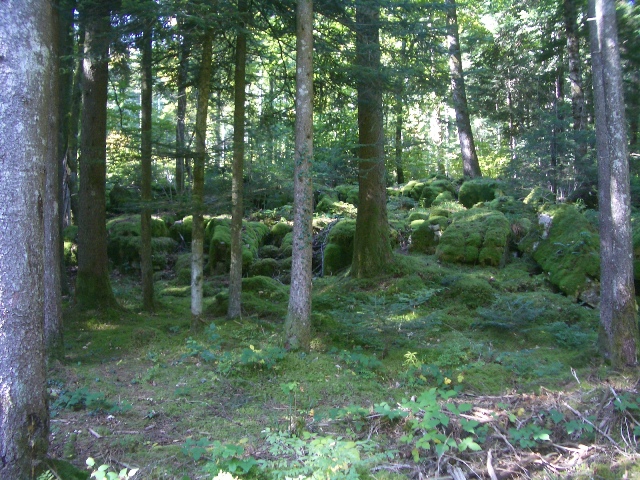
Traditionally team SA arrives a week early before the World Orienteering Champs (WOC) and uses the opportunity to familiarise themselves with the terrain and maps particular to that area. Whilst such preparation is essential, the benefits of beginning that preparation a year earlier are numerous, as shall be explained below.
The necessity of pre-WOC training
Mapping is like painting. Each artist (or mapper) has their own unique style of painting the picture, of interpreting terrain, and putting it onto a canvas. WOC preparation must therefore include running on maps made of the area by the WOC mapper. This allows the orienteer the opportunity to get into the mind of the mapper; to allow an easy flow and understanding; to be able to read from map to terrain and visa versa.
Each WOC area has its own unique features that are key for ones navigation technique. In some areas it will be marshes, in others depressions. The orienteer needs to know what the unique aspects are, and then to practice using them. It is not by chance that in WOC 2010 in Norway several Norwegians took gold medals, with a similar pattern in the Czech Republic the year before.
October 2010 France training camp
A year before WOC 2011 the organisers arranged their first training camp in the area. The camp consisted of 6 days of training, broken in the middle by a weekend of 3 competition events. It was also possible to move across to Geneva the next weekend for two more competitions (one in fact just below the WOC 2012 terrain). The attendance at that camp by a number of SA National Squad members (Tania Wimberley, Nico van Hoepen and Cindy van Zyl) provided the following benefits that would normally be obtained during the training camp the week before WOC:
- Ability to run on areas mapped by the WOC mapper.
- Ability to run in areas next to WOC areas.
- Ability to test techniques unique to that area.
Doing the training a year in advance brought the following benefits:
- The organisers were focussed on training, not WOC. As such they were more accessible for discussion and open to providing insight into mapping techniques and expectations of terrain.
- The touring SA squad members did not have to take turns planning the training (and setting out controls) as they had in the past – this was all done for them.
- There were 19 other countries at the training camp. The teams were in training mode, not WOC mode and were therefore open to discussion and sharing ideas. The internet and blog sites also provided insight into other teams thoughts, again unlikely to happen in the week before WOC.
- There was a competition during the training week and so we were able to get race experience.
- With the benefits of GPS tacking we could see what the top guys were doing in the competitions in the terrain, what techniques they were using. But added to that we then got to run in the same terrain and directly share in the experiences.
- Team SA’s traditional approach of having a pre WOC week of training happens for logistical reasons – cost of flying to Europe and ability to get leave. It does however, have a big disadvantage in that the team is not tapering their training in anticipation of the competition. Hence the team does not go into the competition with fresh legs. Doing the training a year in advance overcomes this disadvantage.
- In France we gained insight into how out of date the old maps, currently published on the WOC website, really are. We had been using these maps in some pre-France preparation, using them for route choice simulations. None of the expectations built-up during this arm-chair exercise materialised and visiting the area showed that we needed a new approach, which can now be refined over the next year.
- The French terrain is more physically tough than had been expected. Again, with this insight, physical training programs can now be developed to address this aspect.
- Mental preparation is always key for orienteering. Trying to familiarise oneself with terrain a week before a competition is rushed and not ideal. Visiting it a year in advance gives ample time to come to grips with the conditions, mentally as well as physically and technically.
International competition
Historically WOC has been the first-ever international competition for some of our orienteers. Again this is not ideal for a sport where mental preparation is as important as physical preparation. For one of our touring orienteers, France was their first international experience, and it was invaluable to do this in a “no pressure” pre WOC situation.
Things that are different to SA include:
- use of the Sport Ident (different to the EMIT timing system used in SA);
- long walks to the start areas;
- long start boxes (and thus the need to consider mental preparation during this time);
- control descriptions only being handed out in the start boxes;
- hundreds of competitors with the implications that “new paths” can appear in the terrain, and more than ever you need to block out everyone around you;
- TV and spectator controls, again bringing with it the need to block out everything else.
The future
To create champions of the future SA needs to be able to provide our Orienteers with world class preparation and training. The top orienteering teams visit a WOC area at least 3 times before WOC. The preparation begins a year, sometimes even 2 years in advance. Such preparation n is essential to ensure the orienteers are in the best physical, technical and mental form. SA would do well to follow the example of the top medal winning nations.
Tania Wimberley
[ You can follow a blow-by-blow account of the groups tour at the Senior Squad Blog.]
great article Tania and I cannot agree more with what you have said. Having experienced the non-ideal situation 3 times in the past. Hopefully one day, when i am big, i will be able to experience it the ideal way as well.
The last WOC 2011 training camp was also a success from the perspective of the criteria given above. Myself and Nick certainly spend some quality time out in the forests on some of the controls.